In a world increasingly saturated by images and overstimulated by textual noise, a group of artists have turned to writing not as a conveyor of information but as a site of resistance, energy, and poetic charge. They have stripped writing of its semantic function, unveiling its corporeal and symbolic dimension. Matox (Nuno de Matos) belongs to this global lineage of artists who treat writing as gesture, form, and intuitive language, in dialogue with pioneers such as Henri Michaux, Xu Bing, Shirin Neshat, Mirtha Dermisache, Isidore Isou, and contemporaries like Tim Gaze and Michael Jacobson.
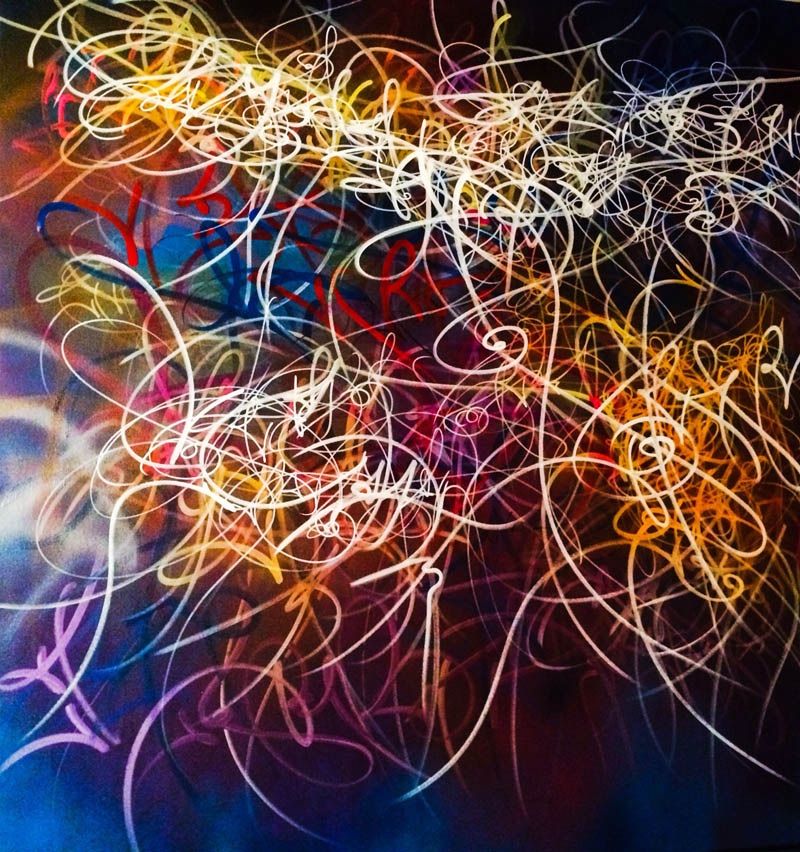
Matox: The Street-Echo of Inner Speech
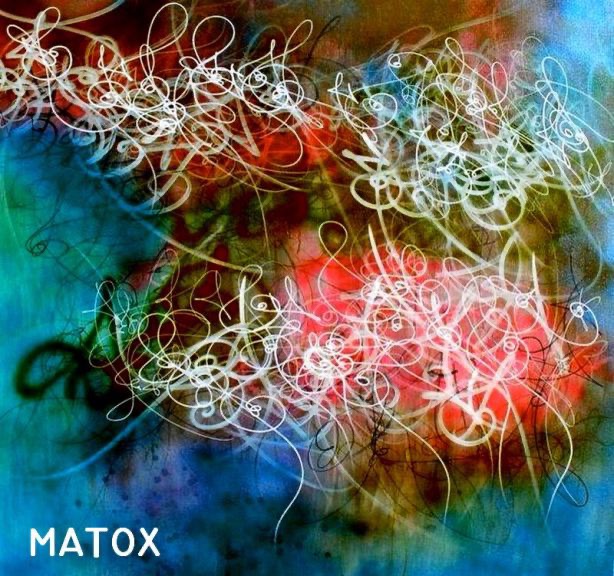
Emerging from the urban calligraphy of graffiti and abstract expressionism, Matox’s asemic compositions blur the border between word and mark. Each piece is a raw manifestation of the internal pulse, an emotional calligraphy untethered from language. His work is urgent and fluid, evoking a script that feels ancient yet invented, tribal yet entirely contemporary. The force of his stroke, often black on white, becomes a form of embodied writing — a visceral response to the need to inscribe presence.
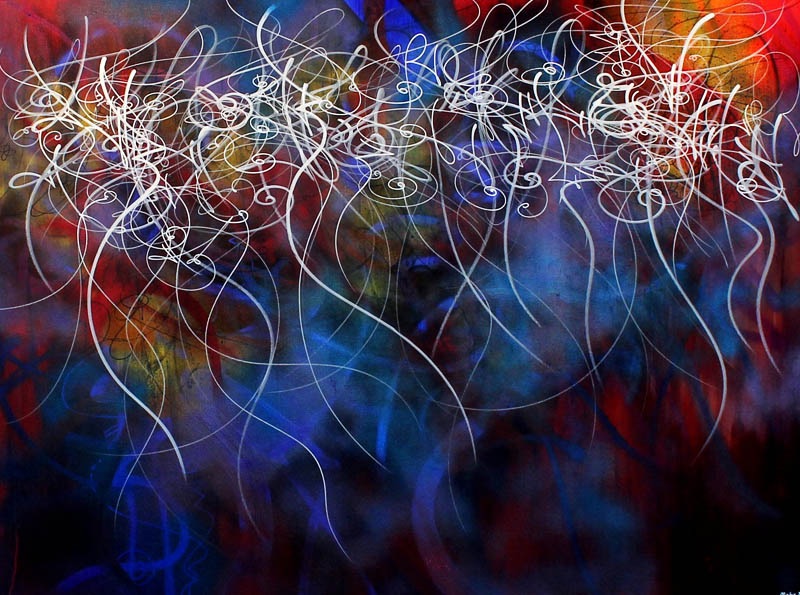
Matox’s practice shares affinities with the automatic writing of Henri Michaux, the visual poetry of Brion Gysin, and the gestural abstraction of Cy Twombly, while extending their legacies into the visual syntax of the 21st century — one influenced by speed, urban rhythm, and deconstructed identity.
Henri Michaux: Writing as Inner Cartography
A foundational figure in the history of asemic expression, Henri Michaux explored writing as a language of the subconscious, a graphism of the ineffable. Under mescaline, Michaux created sprawling fields of invented script — a writing that mimicked speech but referred to no tongue. Like Nuno Matox, he sought a pre-verbal form, more intimate than words, more truthful than syntax. Both artists share a compulsion to write as one might breathe — without translation, without audience.
Xu Bing: Invented Scripts, Cultural Mirrors
With his iconic “Book from the Sky,” Xu Bing created over 4,000 fake Chinese characters, producing an unreadable yet familiar system. His work is political, reflecting on authority, literacy, and identity in post-Mao China. Matox, though less politically didactic, shares with Xu a fascination for the aesthetic structure of language, exploring how non-meaning can be powerful, even spiritual.
Mirtha Dermisache: The Silent Typography of Being
Mirtha Dermisache wrote entire letters, journals, newspapers — none of them decipherable. Her asemic systems evoke institutional formats but are filled with visual silence. Unlike Matox’s gestural immediacy, her work is restrained, contemplative. But they meet in their refusal to transmit meaning, and in their belief that the form of language can speak louder than its function.
Brion Gysin & Isidore Isou: Language as Material
The work of Brion Gysin, with his calligraphic canvases and cut-up technique, aligns closely with Matox’s tactile and spiritual treatment of the written form. Gysin, too, believed in escaping the prison of syntax, inventing a new poetics of fragmentation. Isidore Isou, founder of the Lettrist movement, approached the letter as the raw material of revolution — much like Matox reduces the letter to the line, and the word to pure gesture.
Tim Gaze & Michael Jacobson: Asemic Writing as Conscious Movement
Contemporary theorists and artists Tim Gaze and Michael Jacobson have not only created asemic works but defined the vocabulary and framework of the movement itself. Gaze’s graphic alphabets and Jacobson’s philosophical writings offer language systems without dictionaries, opening asemic writing to new fields of intuitive literacy. Matox’s contribution, though not academic, is visceral — he reintroduces the body and urgency into asemic writing, situating it in the present, street-informed world of graffiti, abstraction, and movement.
Cy Twombly: Scribble as Memory
Cy Twombly’s iconic loops, names, numbers, and broken phrases evoke a writing in ruins — a melancholic echo of meaning, always fading. Twombly’s marks are slower, more meditative than Matox’s, but both share a deep belief in gesture as memory, writing as emotional residue. The canvas is not a space of narration but of visceral inscription.
Conclusion: Asemic Writing as Resistance and Ritual
Together, these artists dismantle the hegemony of semantic communication, crafting instead a visual language of feeling, ritual, and presence. Whether through the sacred alphabets of Xu Bing, the ecstatic inkstorms of Michaux, or the urban calligraphy of Matox, asemic writing becomes a space of liberation — a language beyond nation, history, and code.
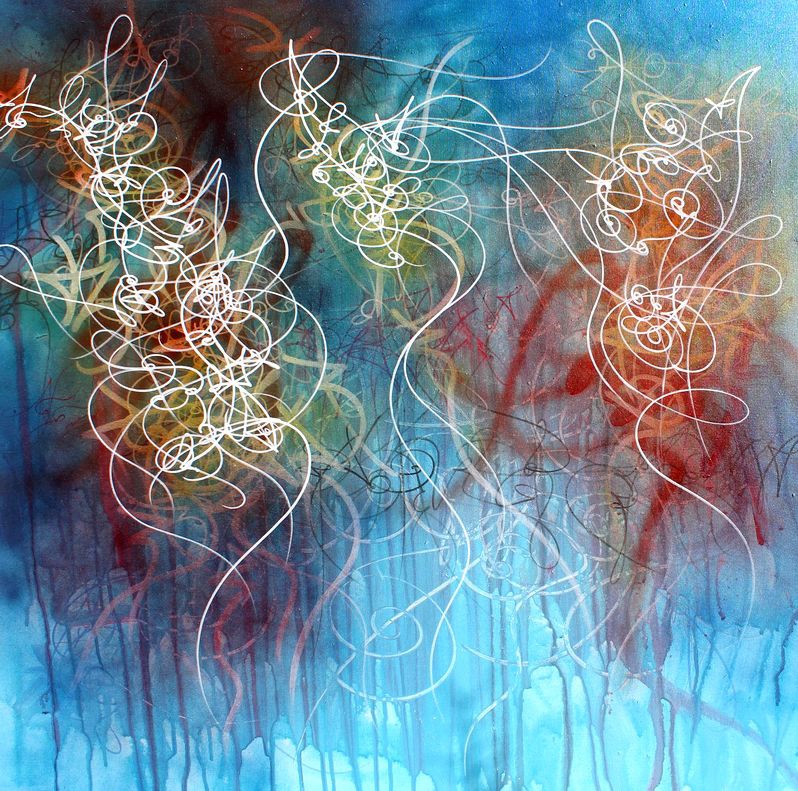
Matox, in this broader constellation, embodies the raw, bodily, and improvisational soul of asemic art. He doesn’t aim to decode, explain, or theorize. He writes as if he had to, as if gesture itself were the only way to say the unsayable.
#Matox #HenriMichaux #XuBing #MirthaDermisache #BrionGysin #IsidoreIsou #TimGaze #MichaelJacobson #CyTwombly #AsemicWriting #ContemporaryArt #VisualLanguage #WritingAsArt #GesturalAbstraction #CuratorialEssay
Matox et l’Écriture Sans Mots
Matox transforme l’écriture en geste pur, libéré du langage. Dans la lignée d’Henri Michaux, Xu Bing, Mirtha Dermisache ou Cy Twombly, il crée une calligraphie instinctive, asémique, qui ne se lit pas mais se ressent.
Son trait, fluide et urbain, évoque un langage intérieur, sans alphabet, entre abstraction lyrique et graffiti spirituel. Il ne cherche pas à dire, mais à inscrire une présence.
Matox écrit comme on respire : sans traduire, mais en laissant trace.
#Matox #HenriMichaux #XuBing #MirthaDermisache #BrionGysin #IsidoreIsou #TimGaze #MichaelJacobson #CyTwombly #ÉcritureAsémique #LangageVisuel #ArtContemporain #ÉcritureGestuelle #Abstraction #PoésieGraphique #EssaiCuratorial
 Casa ilicia Chambres d'Hôtes à Eus